Building the Ecosystem
The audience [you] hold the keys. Together, we can bring these stories home.

Last month, I wrote a post, “Distribution is [as] Parenting.” If you are pressed for time, I can summarize the most important takeaway:
“When I think about distribution as parenting, it frames the values, labor, goals, and legacy differently—perhaps with more care, compassion, and power. If you make a film, you must parent it. It is not a choice; at least for me, it is an obligation—a loving duty. Within this parenting framework, the need to build an ecosystem makes sense.”
In that post, I also invited filmmakers and community members interested in distribution to participate. About a dozen people responded. I met with two people first, then six more. Of those eight, three have continued the conversation. Two have films ready for distribution, and we’ve decided to experiment together; our films have overlapping themes, and we are building a strategy together. That is promising. The third person is bartering resources and building an ecosystem with us now, so it will be useful for their film in post-production. Whether you are a creator or a supporter, there is a place for you in this circle. Reach out
But here is the reality: an ecosystem isn’t just a group of filmmakers in a room. The most vital part of the ecosystem is the audience.
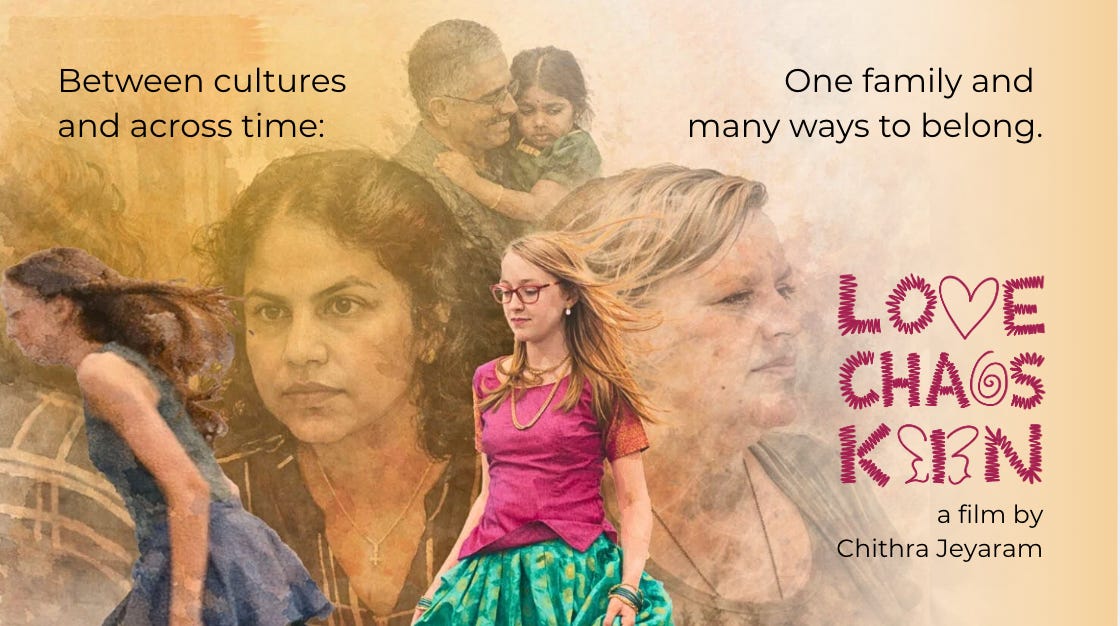
Love Chaos Kin is a 98-minute documentary and an intimate, 12-year longitudinal study of an Indian immigrant couple raising white-presenting twins of Navajo descent. The film follows their journey as they help the children connect with their White and Native American roots, examining cross-cultural kinship within the framework of an open adoption. It offers a vision for a more inclusive America—serving as a powerful, funny, and profound antidote to the current rhetoric surrounding immigrants and identity.
The film is light, intimate, sometimes funny, and profound. It engages diverse audiences with curiosity and wonder, serving as a vital tool for spreading a message of empathy and interconnectedness
Trailer | Website | Audience Response | Press Kit
Love Chaos Kin’s power to resonate is undeniable. The next step is simply building the path to get it out into the world—particularly in front of the audiences who rarely see their own complexities reflected on screen: the adoption community, those exploring parenthood through adoption, mixed-race families, and youth navigating identity and belonging. This film also belongs to the immigrant community—particularly South Asians and Tamils—who are hungry for stories that bypass the usual tropes in favor of the messy, beautiful, and authentic contemporary narratives we actually live.
We are leaning into our greatest strength: the transparent and collaborative bond with the film’s participants. They are engaged creative partners who take immense pride in sharing their journey, a collaboration that truly fills my heart.
Sahana Iyer, our youngest protagonist, was barely three when we began filming in 2017. Now, she calls herself the “plot twist” in the film, which she is. Well, our “plot twist” made this video message for you on how you can be part of our ecosystem and help with Love Chaos Kin’s outreach
This is where YOU come in. Listen to Sahana to discover how to bring this film to your community or access it individually. Please fill out the form by clicking the button below.
The audience holds the keys to the 2026 Love Chaos Kin Tour. Filling out our Google Form is the first KEY step. Whether you want to host a community screening for your organization, want individual virtual access, or want us to bring the film to a cinema near you—your data helps us map the demand.
If enough of you say you want the film in your city, we can take that data to theaters and show them exactly why they should open their doors. Together, we can bring these stories home.
Please stop what you’re doing and fill out the form right now: [LINK]. Then, share it with three other people and encourage them to do the same.
We often talk about independent film as a labor of love, but it is also an industry of scarce resources. Screening fees and individual contributions for virtual viewings are how we sustain this work. They allow us to support outreach and recover years of personal investment and unpaid labor. More importantly, they enable filmmakers like me to keep telling these kinds of stories.
By supporting the film—through individual tickets, screening fees, travel support, and honorariums—you are honoring the deep vulnerability that our participants (especially the mothers and daughters) showed by sharing their stories with us. You are directly ensuring these narratives reach the audiences who need them most.
Help us build the ECOSYSTEM
By letting us know where you are and how you want to engage with Love Chaos Kin, you become a vital part of this tour. Show us the demand, and we will find the path to get the film to your community.
Best,
Chithra