Distribution is [as] Parenting
I know, a strange framing, hear me out.

I have been struggling with my December Substack. It’s not that I don’t have much to say; rather, I have too much to say, and I’ve been trying to streamline my thoughts—to distill them, condense them, and find the core. I’ve been going in circles. My first title was: My Distribution Evolution: 2025 Lessons, 2026 Plans: Stop waiting for the industry. Build your own global engine.
It sounded like a broken record. I have heard this before; in fact, I’ve heard it every year for more than a decade, ever since I decided to switch my career to filmmaking. Even when it was a "golden era" for some, distribution has been challenging for most people for a long time.
This week, as I’ve been doing loads of laundry, deep cleaning, cooking, and exercising, I’ve been asking myself: What did I actually learn about distribution in 2025? What was my evolution? What are the lessons?
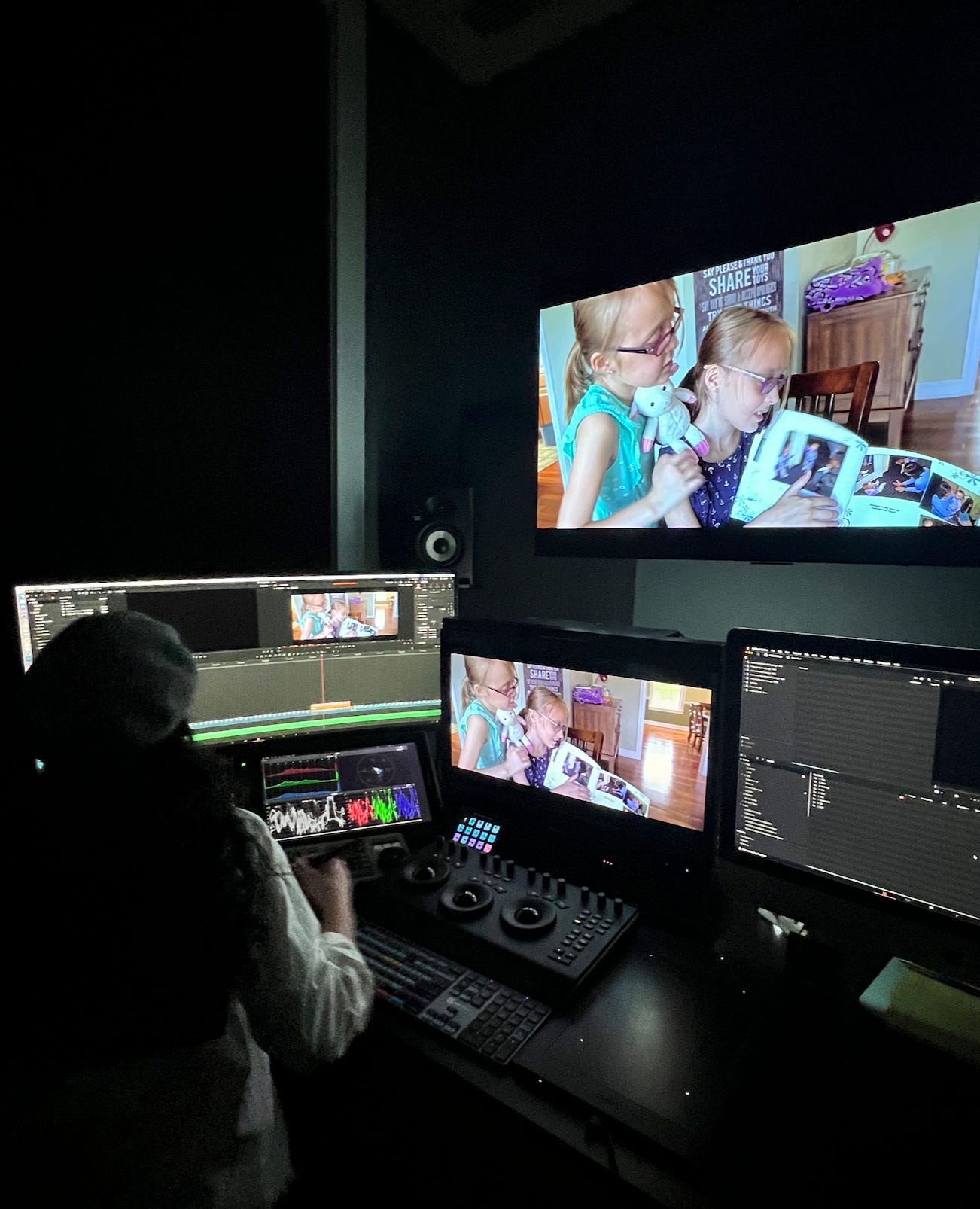
I started 2025 exhausted and anxious. I was entering year eight with my feature documentary about adoption, now titled Love Chaos Kin, which follows an Indian immigrant family raising their adopted, White-presenting twins of Navajo descent. The film advocates for ethical, trauma-informed adoption practices that prioritize a child’s well-being and birth family connections while showcasing a more inclusive, connected America. What film festival will it premiere at? Will it get a distribution deal? How will it be received?
At the same time, I was six months into distribution for the short documentary Amma’s Pride—my first project as a lead producer, where every single day was a new learning experience. Amma’s Pride champions marriage equality in India and unwavering parental support for trans people. It has screened more than 60 times, reaching and moving audiences on every continent across the globe.
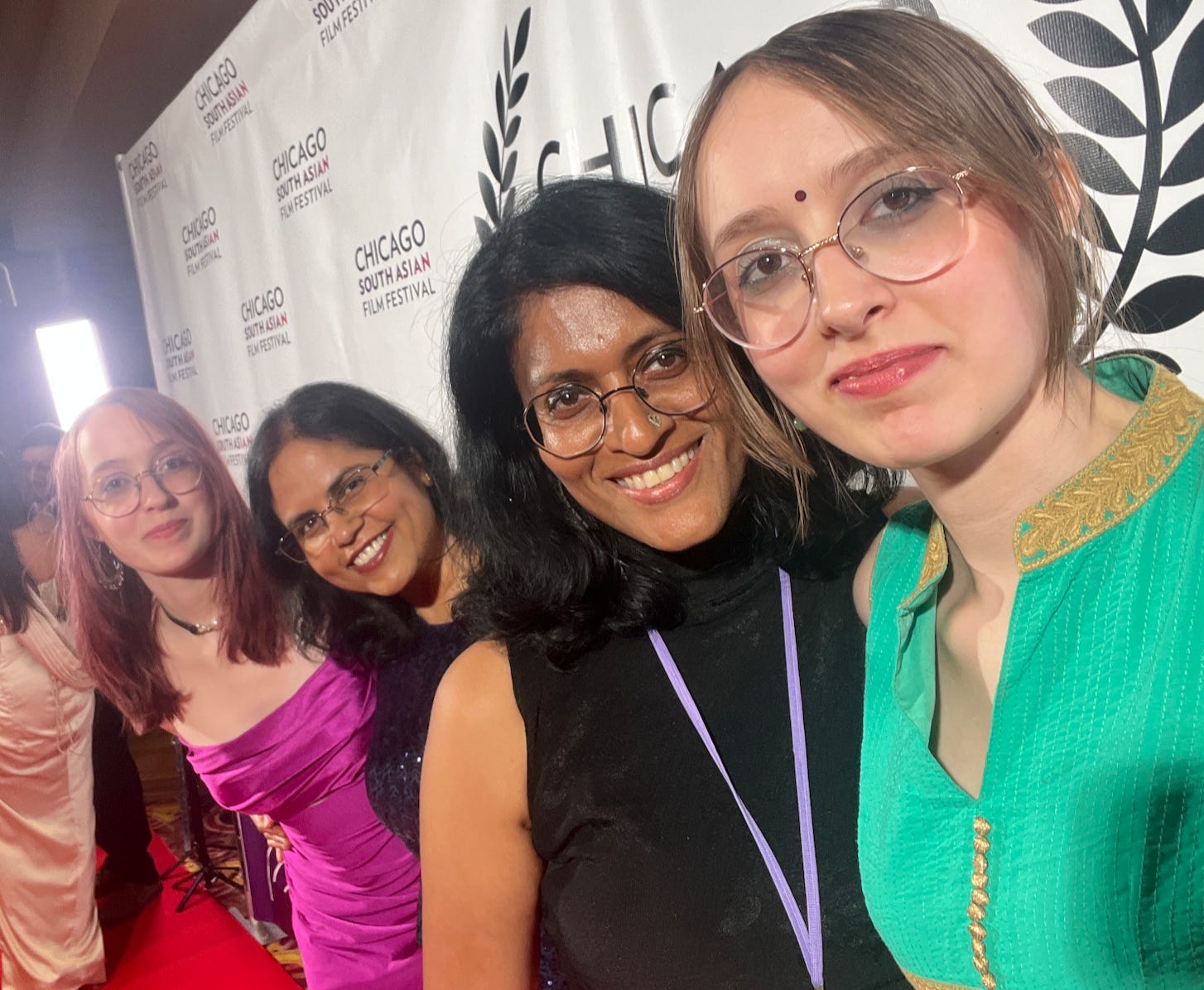
By the end of 2025, we had screened Love Chaos Kin at a dozen film festivals and won three awards, confirming what we now know firmly: the film profoundly moves audiences of all backgrounds, specifically mixed-race families, the adoption community, and immigrants. It began its distribution during a tumultuous year—a time when Diversity, Equity, and Inclusion (DEI) were under fire and Indian immigrants, and H-1B visa holders were under attack. Consequently, our film became increasingly current and urgent, though for very different reasons than we had initially imagined. We were still trying to figure out how to respond to that shift when Amma’s Pride qualified for the Academy Awards, suddenly throwing us into our first-ever Oscar campaign.
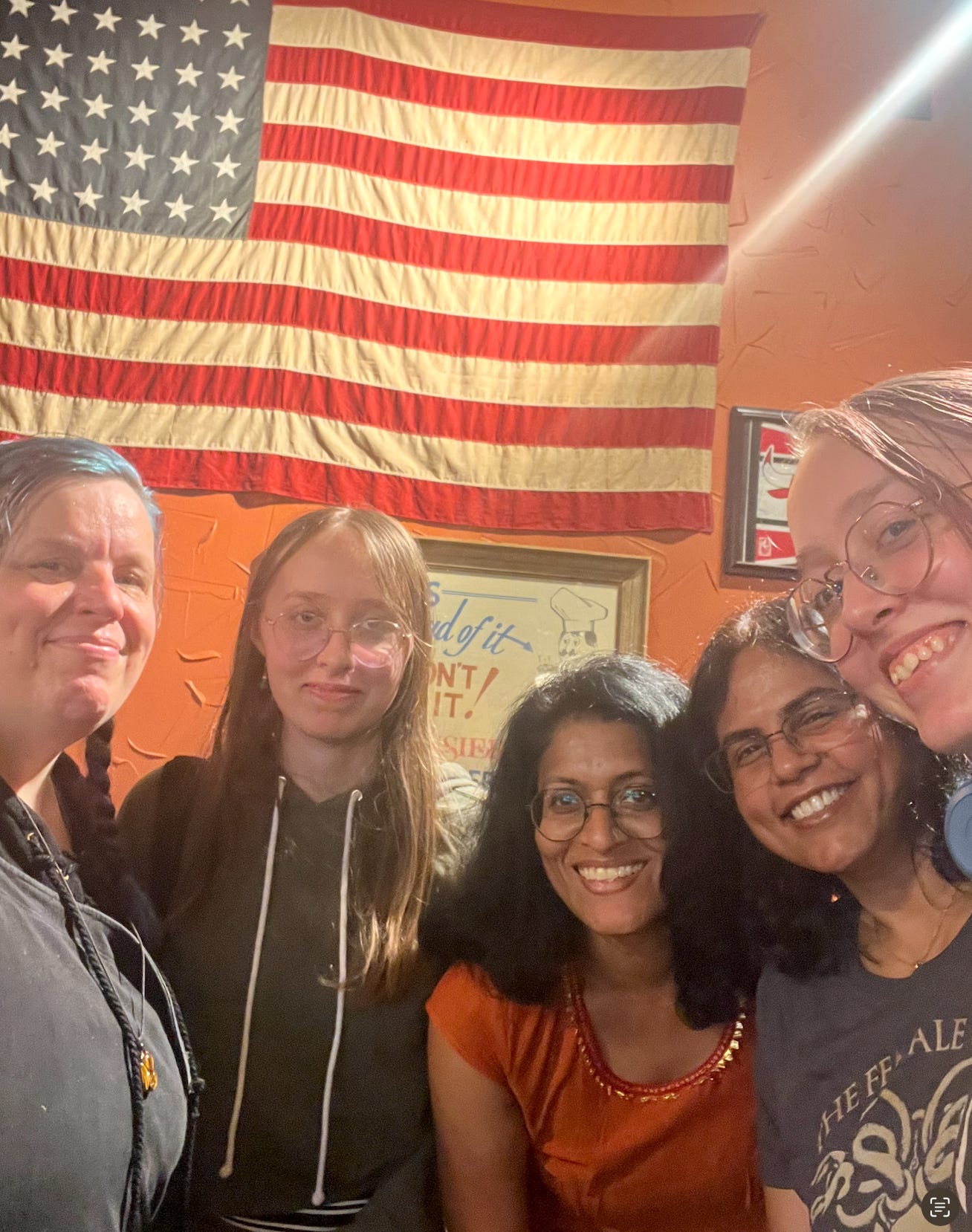
In short, 2025 was dramatic, rewarding, surprising, and incredibly eventful. I was, as one might say, like a recently delivered mother with a toddler already in hand. I have heard the comparison many times—people say, "I finally delivered the baby" when they finish a film—but I had never truly thought of distribution as parenting.
The more I thought about it, the more it made sense. Making a film is like having a child—whether you give birth or not—it is laborious, expensive, exhausting, and time-intensive. But as soon as the “baby” arrives, the real journey starts, and it is lifelong. It never ends. If I think about film distribution as parenting, everything feels different.
For starters, the concepts of self-distribution, indie distribution, and commercial distribution all go out the window. We stop looking at this as a hierarchy. Distribution is simply parenting. Just like parenting needs a village, distribution needs a village. And just like parenting, your resources, community, geography, background, race, and ethnicity all impact the outcome. You are going to be a part of it no matter what; in fact, you are the nucleus, and the ecosystem is built around you.
Once the child (film) is there, it does not matter what state the parent (filmmaker) is in. The filmmaker may be dealing with postpartum depression (the depletion after filmmaking), but the child still needs attention and care. Every child is different, just like every film is different. How one parents depends on the individual child, the time period, and various external and internal factors. Some things are in our control, but almost everything is not. We can plan for some things, but most of the time, we are reacting and learning as we go. There is no rule book!!!
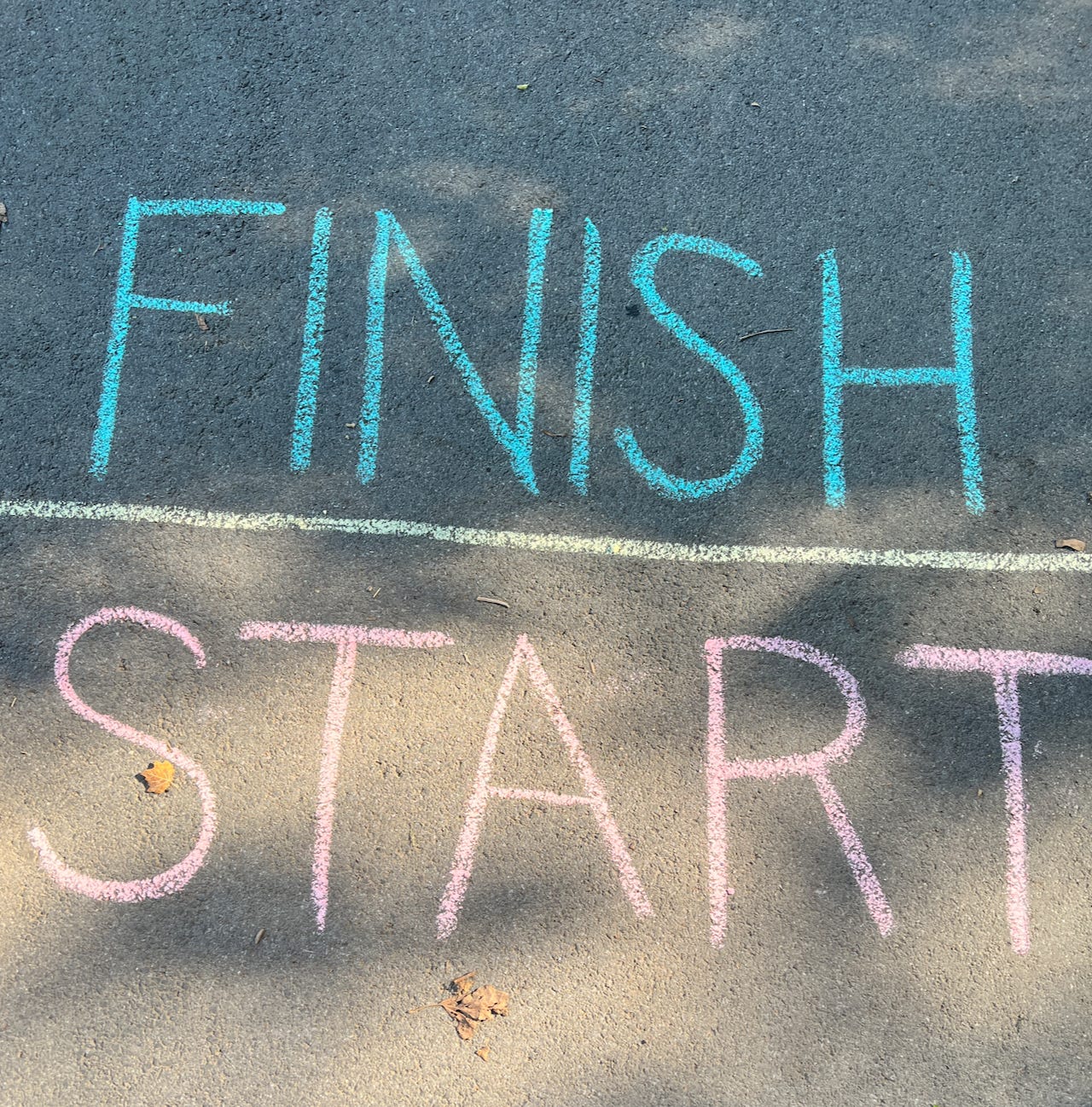
I’ll stop the analogy there—you get the point. There are expectations, both internal and external, that were either met or unfulfilled. Most filmmakers have barely processed the joys and disappointments of finishing a film, let alone recovered from them, before being thrown into distribution. It is a moving train.
My reflections are not about how difficult distribution is or how much harder it might become in 2026. Thinking that way didn’t help me in 2025, nor will it help me now. Instead, I am sharing what worked in 2025 and how I am going to deepen that work in 2026. As we head into the new year, Amma’s Pride enters its third year of distribution, and we are actively planning the theatrical, VOD, and community-led release for Love Chaos Kin.
When I think about distribution as parenting, it frames the values, labor, goals, and legacy differently—perhaps with more care, compassion, and power. If you make a film, you must parent it. It is not a choice; at least for me, it is an obligation—a loving duty. Within this parenting framework, the need to build an ecosystem makes sense. Fundraising, marketing, outreach, braintrusts, audience engagement, and partnerships all fall into place. It helps me view distribution as a lifestyle choice or a behavior, rather than a chore. It is simply part of being a filmmaker.
Throughout 2025, I’ve been thinking about what a healthy distribution pathway looks like for an indie filmmaker with modest means and limited power. What is a strategy that is not extreme or perfect, but sustainable? Here is my New Year’s resolution for distribution, based on how 2025 went for Amma’s Pride and how distribution has begun for Love Chaos Kin.
Let’s “Marie Kondo” Distribution
Instead of listing lessons learned, I am framing these as questions so you can follow along. If you are interested in joining a Zoom call on Jan 9 at 12:00 PM EST to discuss this further.
1. Focus on Joy: What brought you joy, and what drained you regarding distribution in 2025? Which habits did not fit, and what really worked? Don’t think about outcomes; think about behaviors.
For me, seeing people moved by the films, engaging in post-screening conversations, and reading Letterboxd reviews, press, and awards brings immense joy. However, audience size still gives me anxiety. For 2026, I am committed to making my marketing more consistent; this will help me manage that anxiety, accept what is beyond my control, and finally let go.
2. Less is More: Set three goals for 2026 that you can actually keep. Think of them like fitness goals—something you can achieve even during your busiest week. Ask yourself: “Can I do this even when I’m tired?” Consistency is more important than intensity.
Example: In 2025, we focused on videos and collab posts. In 2026, my specific goal is to create 12 interactive, socially engaging posts across all platforms for my films and Real Talkies.
3. Small but Mighty: Align your goals with your physical, mental, and social capacity. Can your life and daily demands support this goal? Remember, every year is built on the foundation of the past. Pick one consistent habit to make your “superpower” in 2026.
For me, the goal is to set up a truly collaborative distribution approach in 2026. I love what Brian Newman wrote about “Collaboration For the Win.” I agree: we need more collaboration to save money, broaden our outreach, and reach more diverse audiences. Working together helps all of us rise above the noise in a crowded marketplace. Are you distributing actively in 2026? Do you want to collaborate for the win? [Fill out this form - and join a Zoom call on Jan 13 at 12:00 PM EST].
Disclaimer: I don’t have a pre-packaged plan; I believe we can figure this out collectively. The dream is to build a collective slate of five to ten films (and filmmakers) for which we can design a joint, staggered, and strategic distribution plan for 2026–2028—including theatrical, VOD, and beyond. Together, we can share resources (both financial and social) to make this vision a reality.
4. Keep it Sustainable: What does sustainable distribution look like for you? How much time and money can you realistically commit? Try defining success in non-monetary terms as well.
Example: Sustainability means ensuring that screenings—both in-person and virtual—average 75% capacity and return a net profit of at least 50% per event. This standard helps justify the immense labor involved and ensures the process is repeatable rather than draining.
I don’t know how this post will be received. We all make films because we have stories that, for whatever reason, we feel compelled to champion and share with the world. Now that they are out there, it is time we stop trying to distribute them in isolation and start building the village we both need and deserve.
Distribution doesn’t have to be a desperate, lonely, or competitive event. It can be a steady, collaborative, and lifelong practice of care. This post is an invitation to learn from one another, build sustainable practices, and distribute our work together—disrupting the ecosystem through collective care. Let’s see what happens.
If you’ve made it this far, thank you. I’m curious—how do you look at distribution? Does the 'parenting' metaphor resonate with you, or do you see it as something else entirely? Whether you are an audience member, a filmmaker, a distributor, or an industry professional, I’d love for you to add to the conversation in the comments.
Also, if this spoke to you, please consider sharing it on your socials or reposting it here on Substack <3
Ways to Connect and Support:
For filmmakers currently distributing: Scroll back up and sign up for our Zoom call. Let’s build that village.
For friends who want to support my work: You can make a tax-deductible contribution to Love Chaos Kin at this [LINK] or Amma’s Pride at this [LINK].
For artists who found value here: If you’d like to buy me a drink or a coffee, you can Venmo me at @Chithra-Jeyaram. I gladly accept! :)
Thank you for being part of my community. I hope 2025 took you on a wild and jolly ride—now, let's get buckled in and ready for a fabulous 2026!